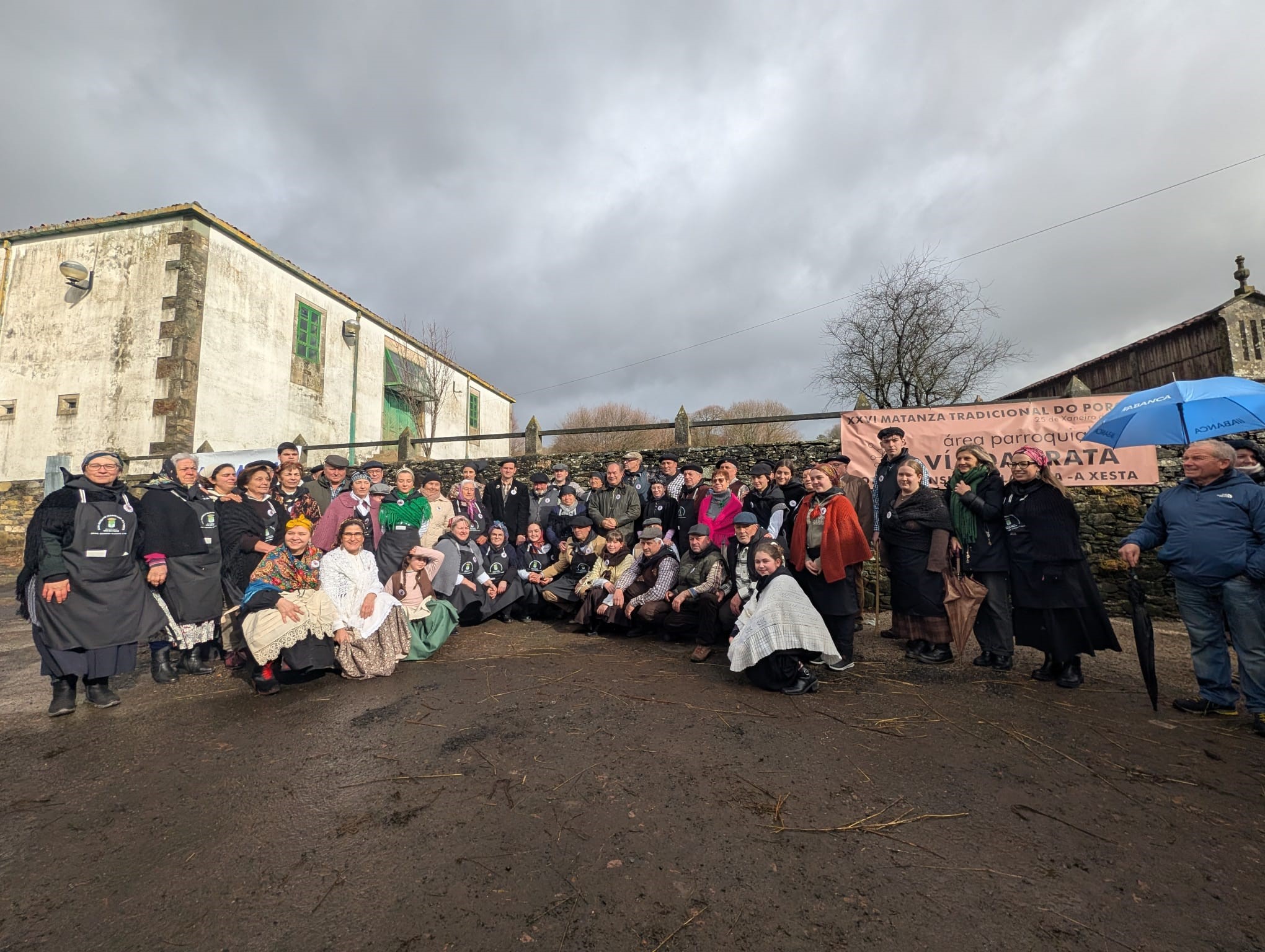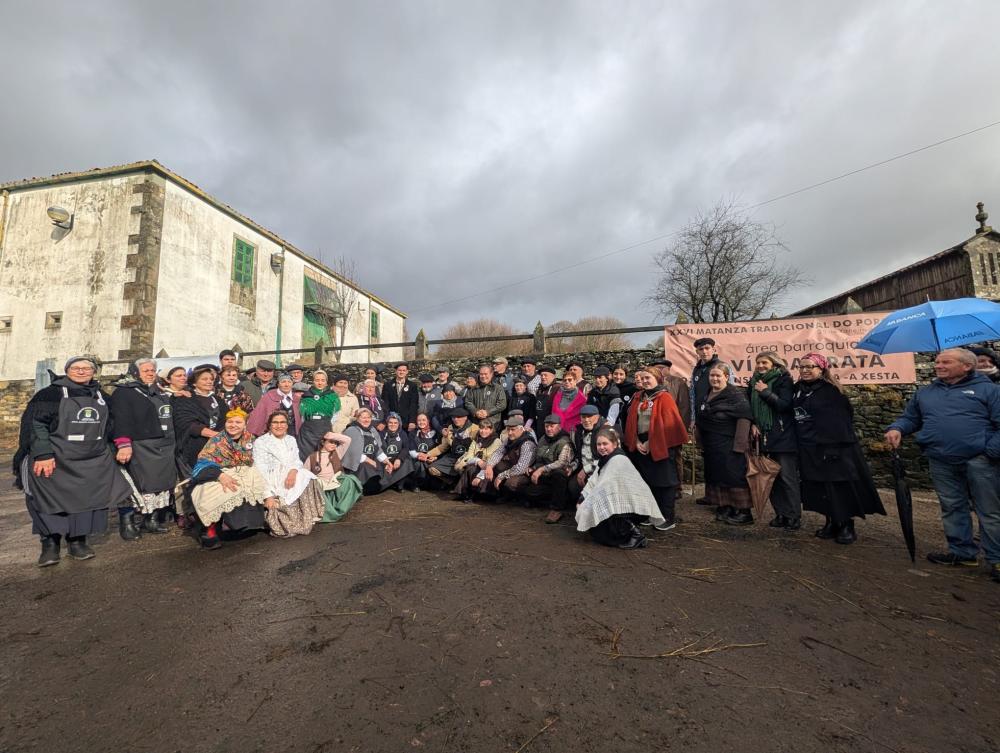

The recreation of this event, linked to the Cocido Fair, involved more than 150 people working on the organisation, craft demonstrations and a large turnout despite the inclement weather.
This year also saw the unveiling of a commemorative granite monument in the shape of a pig to mark the event, and the recreation of an old school classroom inside the Mouriscade mansion.
The 26th Traditional Pig Slaughter, held at the Mouriscade manor house, saw outstanding participation by locals and visitors in a historic edition, as it was the first to be organised by a parish area, Vía de la Plata, made up of the parishes of Botos, Donsión, A Xesta and Vilanova, as part of the programme for the 58th Cocido Fair.
The day began early in the morning in a festive and convivial atmosphere, despite the weather conditions, and highlighted one of the most distinctive celebrations of the traditional culture of Lalín and Galicia.
The event was organised jointly by the local councils and residents of the four parishes of the Vía de la Plata area, in coordination with the Lalín Town Council through the Councillor for Festivals and the area, José Cuñarro, and involved more than 150 people who worked on organising the event in different areas, from the re-enactment of the slaughter to the traditional pig slaughtering, the preparation of typical products, homemade desserts and attending to the public.
The re-enactment of the slaughter began at around 11 a.m. with the performance of traditional musical pieces by Os Trasnos de Doade, followed by the staging of the tasks involved in this ancestral celebration, which were narrated and commented on live by Radio Lalín journalist Gúmer Puertas and by the official chronicler of Lalín, Daniel González Alén, providing attendees with historical, ethnographic, cultural and anecdotal explanations about an event deeply rooted in local identity.
The mayor of Lalín, José Crespo, congratulated the local councilors of the Vía de la Plata parish area (Luis Rodríguez Rozas from Botos; Antonio Pereiro Estévez from Donsión; Gumersindo Ferradás López de A Xesta and Manuel García Gómez de Vilanova) and the residents who helped organise this 26th Matanza under the coordination of councillor José Cuñarro, highlighting the historic nature of this edition as it was the first to be organised under this new parish model, as well as the collective effort made to keep the traditions of yesteryear alive. He also thanked Gúmer Puertas and Daniel González Alén for narrating the event, and the Regional Government and the Provincial Council for their support for the various activities of the Cocido Fair.
The pig was a Lalaína breed, ‘Toñito’, weighing 200 kilos, and Santiago de A Xesta was the slaughterer. Also present was ‘Lalaina’, a 370-kilo sow that was led around the slaughter by her owner and will also take part in the parade at the 58th Cocido Fair. Some examples of Lalaína pigs could also be seen in the old pigsties, located at the bottom of the farmhouse.
Traditional crafts and blind singing
Throughout the morning, there was also an exhibition of traditional crafts, which added another attraction to the event, as did the baking of bread in a traditional oven, which was later given to the audience to taste along with other typical products. This edition also featured blind singing. In the afternoon session, there was also music provided by a musical duo and a DJ.
The Mouriscade mansion is a outstanding example of rural stately architecture in the municipality of Lalín, built of granite masonry and with functional elements such as balconies, external staircases and adjoining outbuildings for agricultural use (granary, chapel, oven and a traditional village kitchen with a wood-burning stove and fireplace in the same room). It is a noble house linked to a farm that served a dual purpose, both residential and productive.
One of the unique attractions of this edition was the opportunity to visit a recreated old school classroom inside the building, equipped with desks and teaching materials from the period, which aroused considerable interest among those attending.
This property is currently owned by the municipality, along with other disused properties linked to the Mouriscade estate, since the Provincial Council transferred them to the Town Council in August 2024, a procedure that was signed before a notary. It is worth noting that this year marks the twentieth anniversary of the slaughter held in the same place, organised by the parishes of Doade and Vilanova (in 2006).
As a new feature of this 26th edition, at the end of the day a commemorative granite milestone was unveiled, marking the edition and location of the Traditional Pig Slaughter.
In addition to the mayor, the event was attended by provincial deputy Belén Cachafeiro, the regional director of Rural Affairs, and a distinguished group of councillors.
The day ended with a tasting of typical products in a marquee located next to the Mouriscade Laboratory, in an atmosphere of conviviality and appreciation of local traditions, consolidating the Traditional Slaughter as one of the most emblematic events of the Cocido Fair. Next year, it will be the turn of the Val do Arnego parish area to organise the Slaughter.